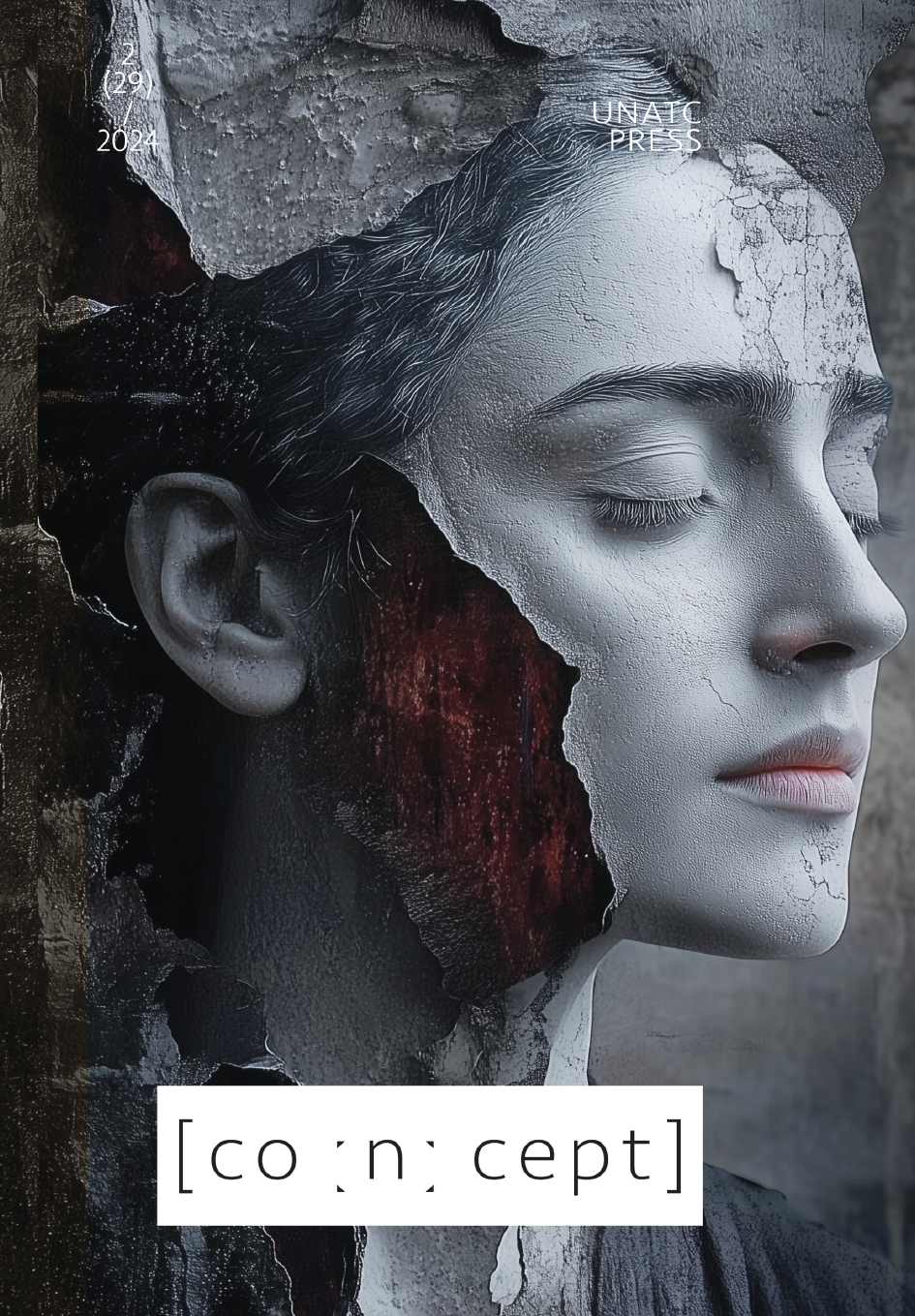
AI-Generated Images and Influences on Scenographic Design
DOI:
https://doi.org/10.37130/kjg4pr54Keywords:
co-creation, prompt poetics, augmented human creativity, Generative Artificial Intelligence, human agency, creativity, scenography, style transferAbstract
The advent of generative AI represents a significant transformation in image creation. It is essential to explore the implications of incorporating this technology into scenography and to begin dialogues about the fundamental challenges and opportunities arising from this developing relationship. Recent AI tools have demonstrated the ability to produce outputs traditionally considered creative. Systems such as text-to-image generative AI (e.g., Midjourney, Stable Diffusion, DALL-E) automate human artistic execution to generate digital artworks. This paper explores rapid visualisations of set design concepts, aiming to provoke critical introspection regarding the interplay between artificial and human creativity in shaping images for performance design, the impact on the creative process and workflow of designers. Does generative AI introduce a novel aesthetic dimension to scenography? Can it truly amalgamate diverse historical and contemporary styles to create visuals that are both
evocative and unprecedented?
References
Anantrasirichai, N., & Bull, D. (2020) ”Artificial intelligence in the creative industries: a review”, Artificial Intelligence Review, 55, pp. 589-656.
Boden, M.A. (2004) The Creative Mind: Myths and Mechanisms, Routledge.
Cheng, M. (2022) ”The Creativity of Artificial Intelligence in Art”, Proceedings.; 81(1), p. 110. https://doi.org/10.3390/proceedings2022081110.
Earnshaw, R. and Liggett, S. (2023) ”Artificial Intelligence and Creativity”. In Earnshaw, R., Liggett, S., and Townsley, J. (eds) Creativity in Art, Design and Technology. Springer Briefs on Cultural Computing, pp. 65-71.
Lee, H.-K. (2022) ”Rethinking creativity: creative industries, AI and everyday creativity”, Media, Culture & Society, 44(3), pp. 601-612.
Manovich, L. (2017) Cultural Analytics. Cambridge, MA: The MIT Press.
Manovich, L. (2018) AI Aesthetics. Strelka Press.
O’Toole, K. and Horvat, E.-A. (2024) ”Extending human creativity with AI”. Journal of Creativity. doi: https://doi.org/10.1016/j.yjoc.2024.100080.
Rajcic, N., Llano, M. T., and McCormack, J. (2024) ”Towards A Diffractive Analysis of Prompt-Based Generative AI”, in Proceedings of the 2024 CHI Conference on Human Factors in Computing Systems (CHI ’24), May 11–16, 2024, Hawaii, USA. ACM, New York, NY, USA.
Sawyer, R. K. (2014) Explaining Creativity: The Science of Human Innovation. New York, NY: Oxford University Press.
Vinchon, F., et al. (2023) ”Artificial Intelligence & Creativity: A Manifesto for Collaboration”, The Journal of Creative Behavior, 57(4), pp. 472–484. https://doi.org/10.1002/jocb.597.
Walewska, J. (2023) ”Relationship of art and technology: Edward Ihnatowicz’s philosophical investigation on the problem of perception”. In S. Cubitt & P. Thomas (Eds.), Relive media art histories, The MIT Press, pp. 172–177.
Campitiello, J. (2023) ”vs. Artist: The Future of Creativity”. Cornell Tech News. Available at: https://tech.cornell.edu/news/ai-vs-artist-the-future-of-creativity/ (Accessed: 17 June 2024).
Fitzpatrick, R. (2018) ”Human creativity v machine creativity: When artificial intelligence gets creative”. Campaign Live, 5 March. Available at: https://www.campaignlive.co.uk/article/human-creativity-v-machine-creativity-when-artificial-intelligence-gets-creative/1485063 (Accessed: 17 June 2024).
Fridman, L. (2024) ”François Chollet: Keras, Deep Learning, and the Progress of AI”. Lex Fridman. Available at: https://lexfridman.com/francois-chollet/ (Accessed: 17 april 2024).
Pogrebin, R. (2012) ”Architecture and the Lost Art of Drawing”. The New York Times, 2 September. Available at: https://www.nytimes.com/2012/09/02/opinion/sunday/architecture-and-the-lost-art-of-drawing.html (Accessed: 17 march 2024).
Zhou, E. and Lee, D. (2024) ”Generative artificial intelligence, human creativity, and art”. PNAS Nexus, 3(3), pp. 1–8. Available at: https://academic.oup.com/pnasnexus/article/3/3/pgae052/7618478 (Accessed: 06 March 2024).