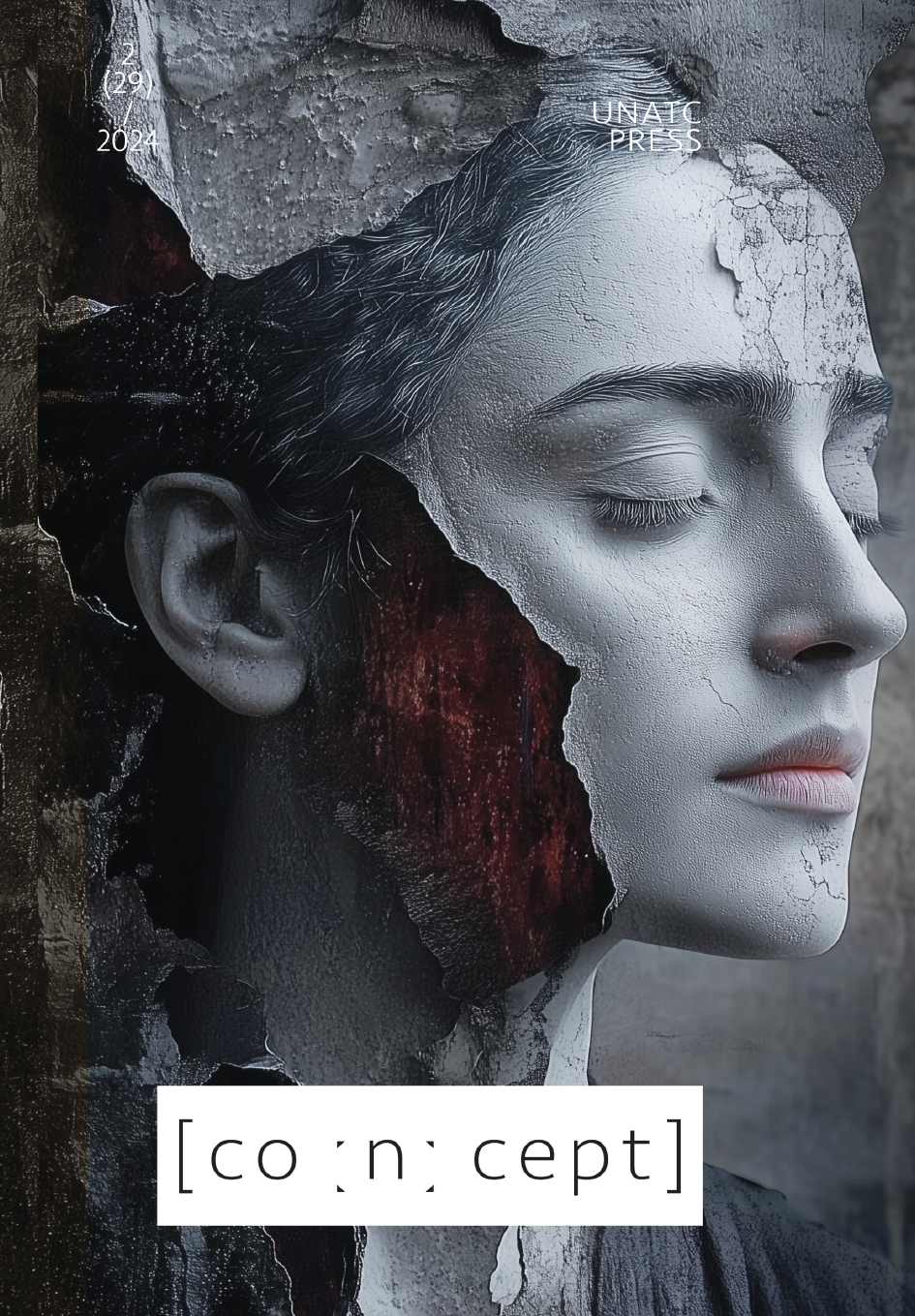
Photography in the Light of AI-Generated Images
DOI:
https://doi.org/10.37130/0xnx6h41Keywords:
generated image, photography, documentary photography, image ontology, realismAbstract
Generative Adversarial Networks are raising various concerns among photographers and cinematographers regarding the value of their own artwork. With the latest versions of products like Midjourney (i.e., v6) or OpenAI’s Sora, generated images are getting closer to what some may call technical perfection. But is perfection to be sought in photography? Walter Benjamin’s essay – The Work of Art in the Age of Mechanical Reproduction (1935) – seems to astutely approach even today’s debate on artificial intelligence versus photography. While Benjamin’s essay focuses more on photography as a reproduction of painting, it still leads us to a question we raise in this article: will the emergence of AI-generated images shine some new light on the document value of photography? If so, what are the stylistic features of photography that may recall the immediacy of a specific moment? Looking back at the work of some
famous photographers (e.g. Bresson, Davidson) and comparing it with AI-generated results, we can further understand that the real value of photography relies on its unrepeatable character. This is being reflected through minor imperfections, either technical or compositional. Can this kind of imperfections become part of a movement that reevaluates form in photography?
References
Barthes, R. (2010) Camera Lucida: Reflections on Photography. Reprint edition. Translated by R. Howard. New York: Hill and Wang.
Baudrillard, J. (1994) Simulacra and Simulation. Translated by S.F. Glaser. Ann Arbor, Mich: University of Michigan Press.
Benjamin, W. (2008) The Work of Art in the Age of Its Technological Reproducibility, and Other Writings on Media. First Edition. Edited by M.W. Jennings, B. Doherty, and T.Y. Levin. Cambridge (Mass.): Belknap Press: An Imprint of Harvard University Press.
Elkins, J. (2011) What Photography Is. 1st edition. Routledge.
Feuerbach, L. (2008) The Essence of Christianity. Dover Publications.
Maynard, P. (2000) The Engine of Visualization: Thinking through Photography. Ithaca, NY: Cornell University Press.
Mulligan, T. and Wooters, D. (eds) (2012) A History of Photography: From 1839 to the Present. Taschen America Llc.
Bhattacharjee, G. (2023) “Art and Photography in the Age of Artificial Intelligence”, 12th International Photographic Conference of PAD, Kolkata, [Preprint]. Available: https://www.academia.edu/97272074/Art_and_Photography_in_the_Age_of_Artificial_Intelligence (Accessed: 5 September 2024).
Kendall, E. (n.d.) „uncanny valley”. Encyclopedia Britannica, 30 Sep. 2024, https://www.britannica.com/topic/uncanny-valley. (Accessed: 5 September 2024)
Maynard, P. (1989) “Talbot’s Technologies: Photographic Depiction, Detection, and Reproduction”, The Journal of Aesthetics and Art Criticism, 47(3), pp. 263–276. Available at: https://doi.org/10.2307/431006.
Perini, L. (2012) “Depiction, Detection, and the Epistemic Value of Photography”, The Journal of Aesthetics and Art Criticism, 70(1), pp. 151–160. Available at: https://doi.org/10.1111/j.1540-6245.2011.01506.x.
Petelin, G. (2009) “What does photography document?” Available at: https://www.academia.edu/208132/What_does_photography_document (Accessed: 5 September 2024).
Sułkowska, M. (2004) ‘The Aestheticization of Life by Photography’, in A.-T. Tymieniecka (ed.) Imaginatio Creatrix: The Pivotal Force of the Genesis/Ontopoiesis of Human Life and Reality. Dordrecht: Springer Netherlands, pp. 495–503. Available at: https://doi.org/10.1007/1-4020-2245-X_29